Fixing a Noisy Breaker Box, Fast
A buzz or hum coming from the switchboard is easy to ignore until you can't. It usually means something behind the cover isn't sitting right.
We'll explain what causes it, when it's genuinely urgent, and what it takes to fix. If yours is doing it now, call (02) 9538 7444 and we'll talk you through it.
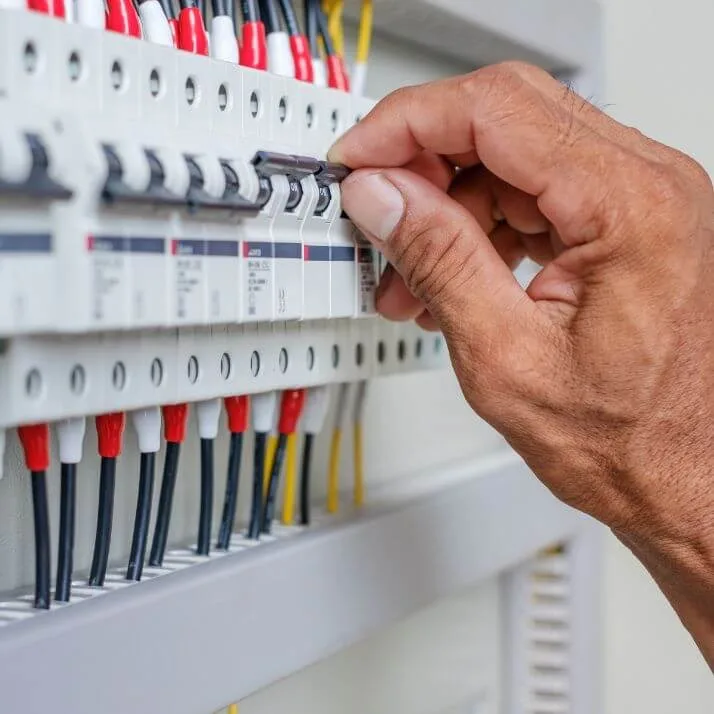
What a Noisy Breaker Box Actually Means
A switchboard makes noise when current isn't flowing cleanly through a connection.
A loose terminal, a worn switch mechanism, or a fuse carrier that's no longer gripping properly can all produce a buzz or a low hum as electricity arcs slightly across the gap.
It's a mechanical problem showing up as sound before it shows up as anything else, which is actually useful. The noise is an early warning, not the fault itself.
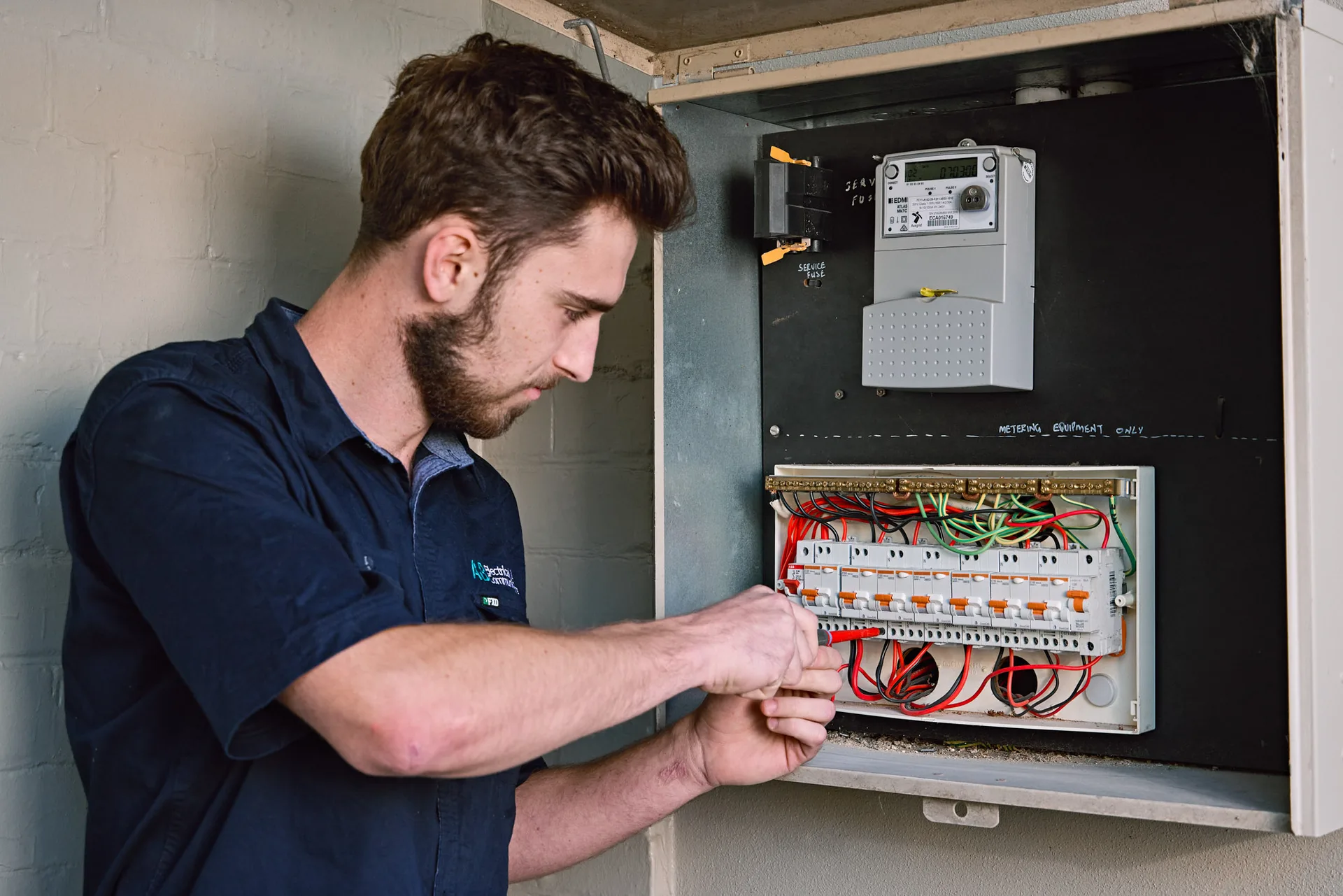
What Usually Causes It
A handful of causes account for most of the noisy boards we're called out to.
- A loose connection at a terminal. Vibration and age both work a screw connection gradually looser, and the resulting gap is what you're actually hearing.
- A worn circuit breaker mechanism. Internal contacts degrade with years of switching on and off.
- A ceramic fuse carrier not seated properly. Common on older boards that still run this style of fuse rather than a modern breaker.
- A failing safety switch. The internal mechanism can hum as the switch itself starts to go.
- Water ingress or corrosion. Rare, but it does happen on an exposed or ageing enclosure over time.
- A genuinely overloaded circuit. Heavy load through an undersized connection can hum audibly under strain.
Most of these share a common thread: something that used to make firm contact no longer does, and the small gap that results is where the noise comes from.
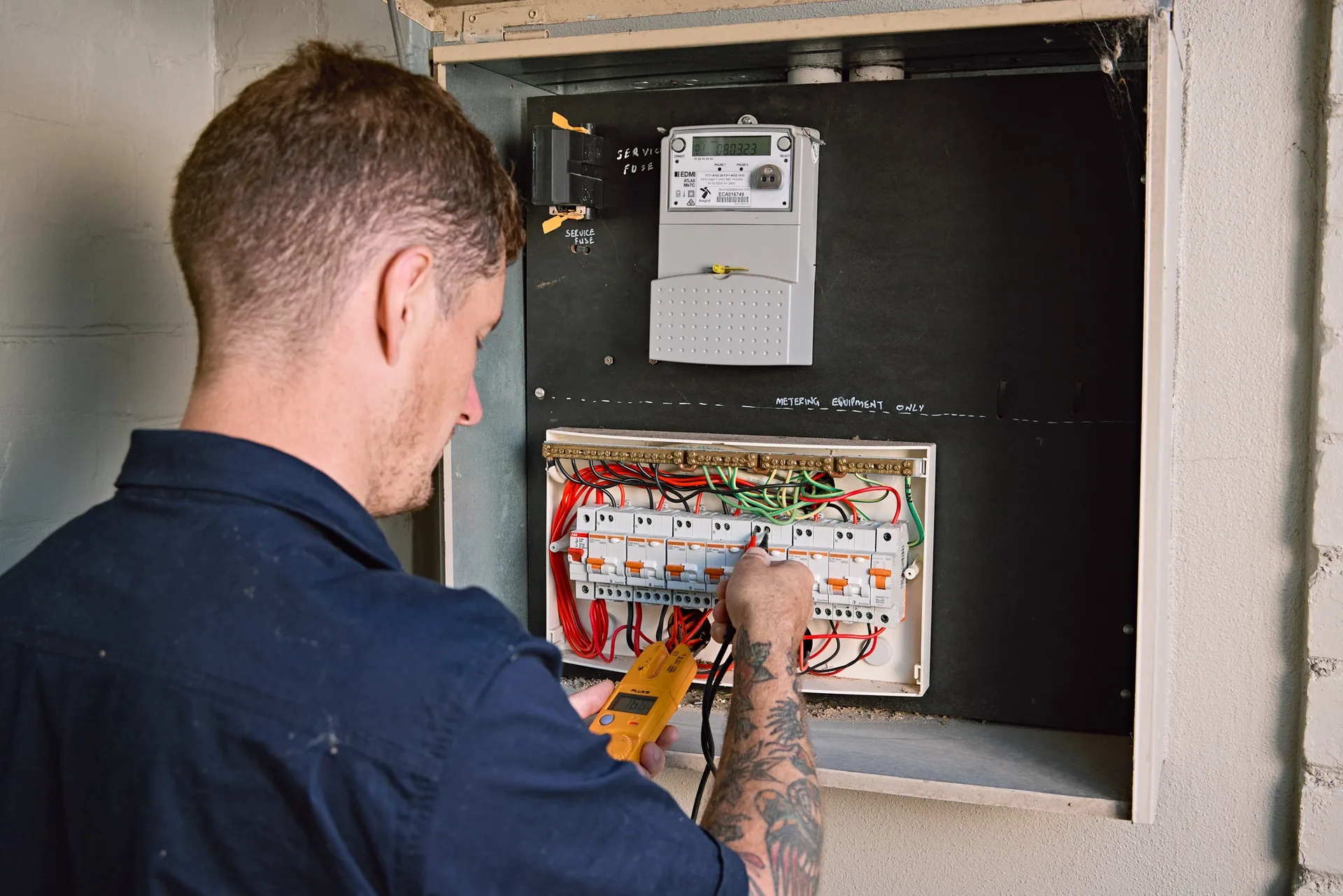
Should You Worry? An Honest Answer
A quiet, consistent hum with no heat and no smell isn't an emergency. It's worth booking in soon, not tonight.
The picture changes if the hum gets louder, if you feel warmth on the board's cover, or if there's any smell at all.
Any of those together means stop using the affected circuit and call us straight away rather than waiting for the booking.
A crackling or popping sound, as opposed to a steady hum, also moves this into urgent territory immediately.
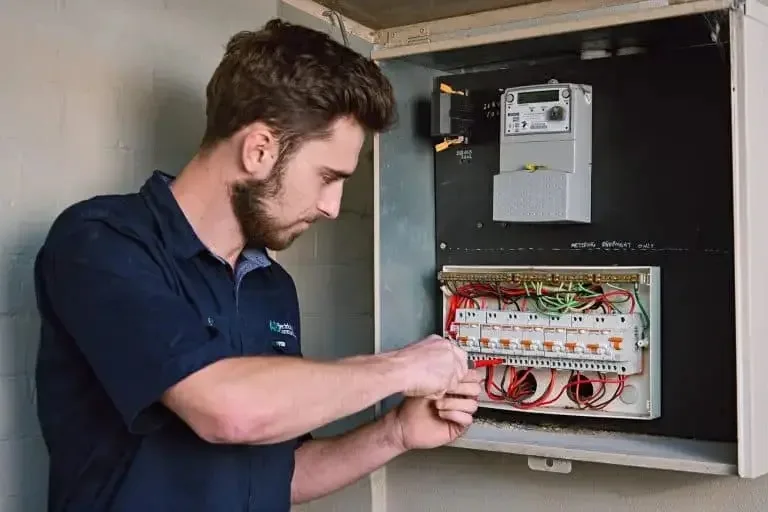
What To Do Right Now
Don't touch the board's internals. Looking is fine. Opening the cover or poking at connections isn't.
Note which circuit, if you can tell. If the hum seems to follow one particular light or appliance, that detail helps us find it faster.
Switch off the affected circuit where you can reach it safely. This takes pressure off the connection while you wait.
Call us rather than waiting it out. A hum that's building tends to keep building.
How We Fix and Certify the Repair
We isolate the board safely, then work through each switch and connection with proper test equipment rather than listening and guessing.
A thermal check often forms part of this, since a loose connection tends to run warmer than the ones around it well before it's hot enough to notice by hand.
Once we've found the loose terminal, worn switch or failed fuse carrier, we explain exactly what's involved and put the fix in writing before anything's touched further.
Sometimes the fix is as simple as re-tightening and re-testing a single terminal. Other times, particularly on an older fuse-style board, the honest advice is that the whole board is due for replacement rather than another patch.
The repair is carried out to AS/NZS 3000, and where the work is notifiable, it's certified once finished and tested.
Our lifetime workmanship guarantee applies to the repair, so if the same fault returns because of our work, we come back at no charge.
Why Annandale's Housing Makes This Common
A good number of the older boards we open up around Piper Street and the surrounding cottage streets are still running original ceramic fuse carriers rather than modern circuit breakers.
Those fuse carriers rely on a spring-loaded contact that was never designed to be checked or serviced for a century.
Once that contact wears or the fuse wire itself sits slightly loose, a hum is often the first sign, well before anything actually fails outright.
It's a different mechanism to the capacity issues that show up elsewhere on an old board, and it's one we see specifically on the fuse-style boards still common in this pocket of the Inner West.
The DIY Fix People Try, and Why It Doesn't Work
A common instinct is to tighten the visible screws on the switchboard cover, thinking that solves a loose connection.
It doesn't. The connections that actually cause a hum sit inside the board, behind the cover, and they're live whenever the mains are on.
Another common belief is that a hum will simply go away on its own once the weather cools or the load on the house drops. Sometimes it does quieten, which makes it easy to assume the problem's solved.
It hasn't gone anywhere. The underlying connection is still loose, and it will hum again, usually at a worse moment than the first time.
Prevention Beats Repair
A hum caught early is a five-minute fix. Left alone, the same loose connection can eventually fail and take a circuit with it.
- Have any hum or buzz checked as soon as you notice it, not once it's louder
- Replace a ceramic fuse board with modern circuit breakers if it's showing wear
- Get terminals re-torqued periodically on an older board that's never been serviced
- Avoid overloading a single circuit with heavy appliances
- Book a switchboard check if you can't remember the last one
A full switchboard upgrade removes the ceramic-fuse wear point entirely, while a one-off connection issue is more often just an electrical repairs callout.
Servicing Annandale and Nearby Suburbs
We hear about noisy boards from right across Annandale, and we're regularly in Leichhardt, Lilyfield and Balmain the same week for similar work.
If your board trips instead of humming, that's a separate problem, and we've written up tripped circuit breaker causes and fixes on its own.

Book an Electrician Today
A hum rarely fixes itself, and it's cheap to check properly. Call (02) 9538 7444 for a free quote, with $50 knocked off your very first booking.
Common questions
Annandale Noisy Breaker Box FAQs
Quick answers on the questions we hear most about a humming or buzzing board.
Is a humming switchboard an emergency?
Not on its own. A steady hum with no heat and no smell is worth booking soon, and it becomes urgent the moment either of those appear.
Should I turn off the mains?
Only if you notice heat or a smell. Otherwise, switching off the specific noisy circuit is usually enough while you wait for us.
Can I fix it myself?
No. Switchboard work is licensed electrical work under NSW law, and opening the board yourself risks a shock even with the power off elsewhere in the house.
How long does the repair take?
Isolating a hum to one loose connection is often a quick fix. A full board replacement takes longer, and we'll give you a realistic estimate on site.
Do old fuses make this worse?
Yes. A ceramic fuse carrier with a loose wire connection is one of the more common sources of a hum we find in this suburb's older boards.
How fast can you get to Annandale?
Often same or next day for a standard booking, with priority given to anything showing heat or a smell alongside the noise.