Fixing a Tripped Circuit Breaker, Fast
One trip is a minor annoyance. A breaker that trips over and over is trying to tell you something.
This page covers what's actually going on and how we track it down. Ring (02) 9538 7444 if yours refuses to hold.
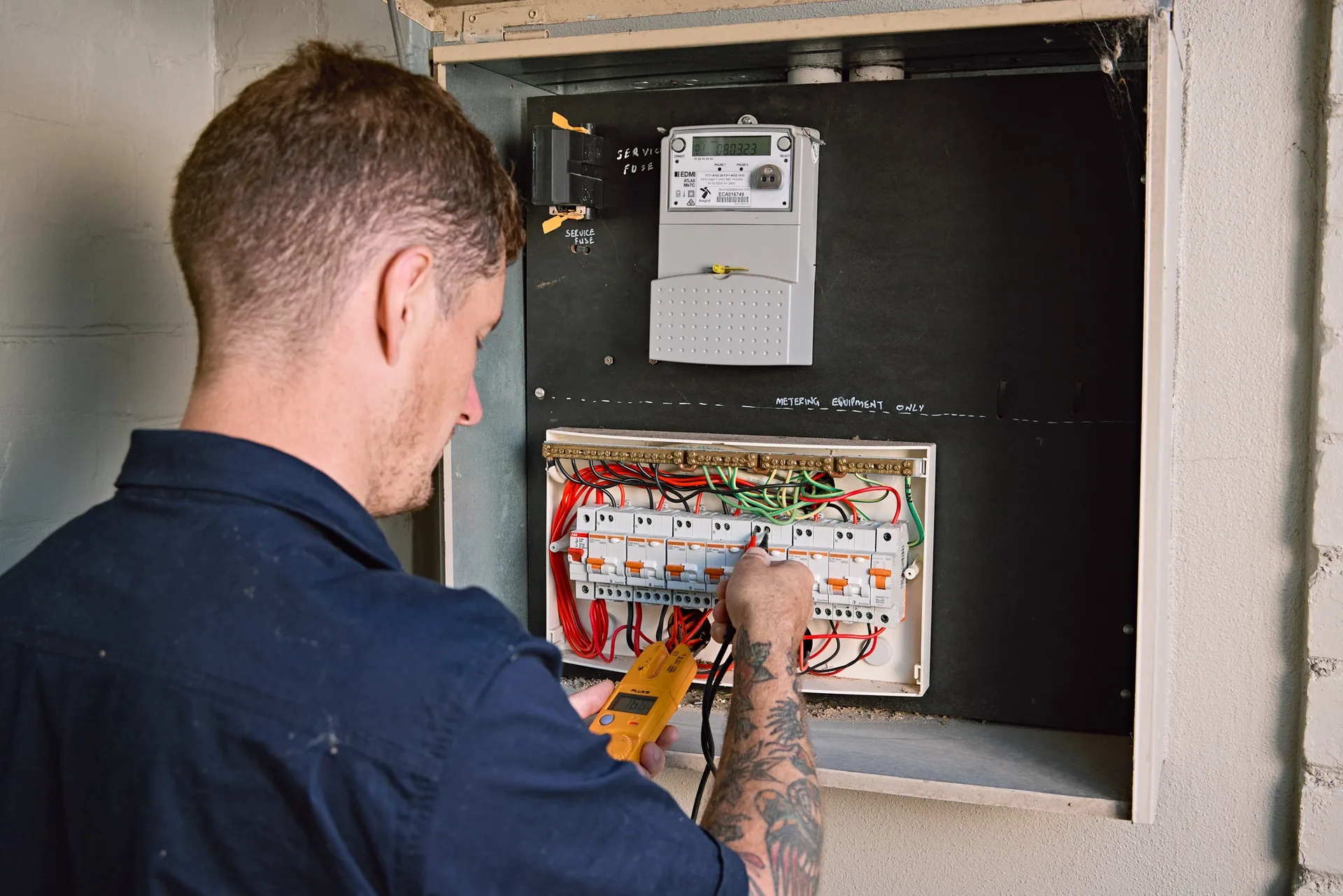
What a Tripped Circuit Breaker Actually Means
A circuit breaker trips as a protective response, cutting power the moment it detects more current than the circuit is rated to carry safely.
That's the mechanism doing its job, not failing at it.
The real question is what's actually pushing the current past that threshold.
Sometimes it's obvious, an appliance drawing too much. Other times the cause is hidden in the wiring itself.
One trip under an unusual load is a different picture to repeated trips under normal daily use. The second pattern is the one worth a proper look.
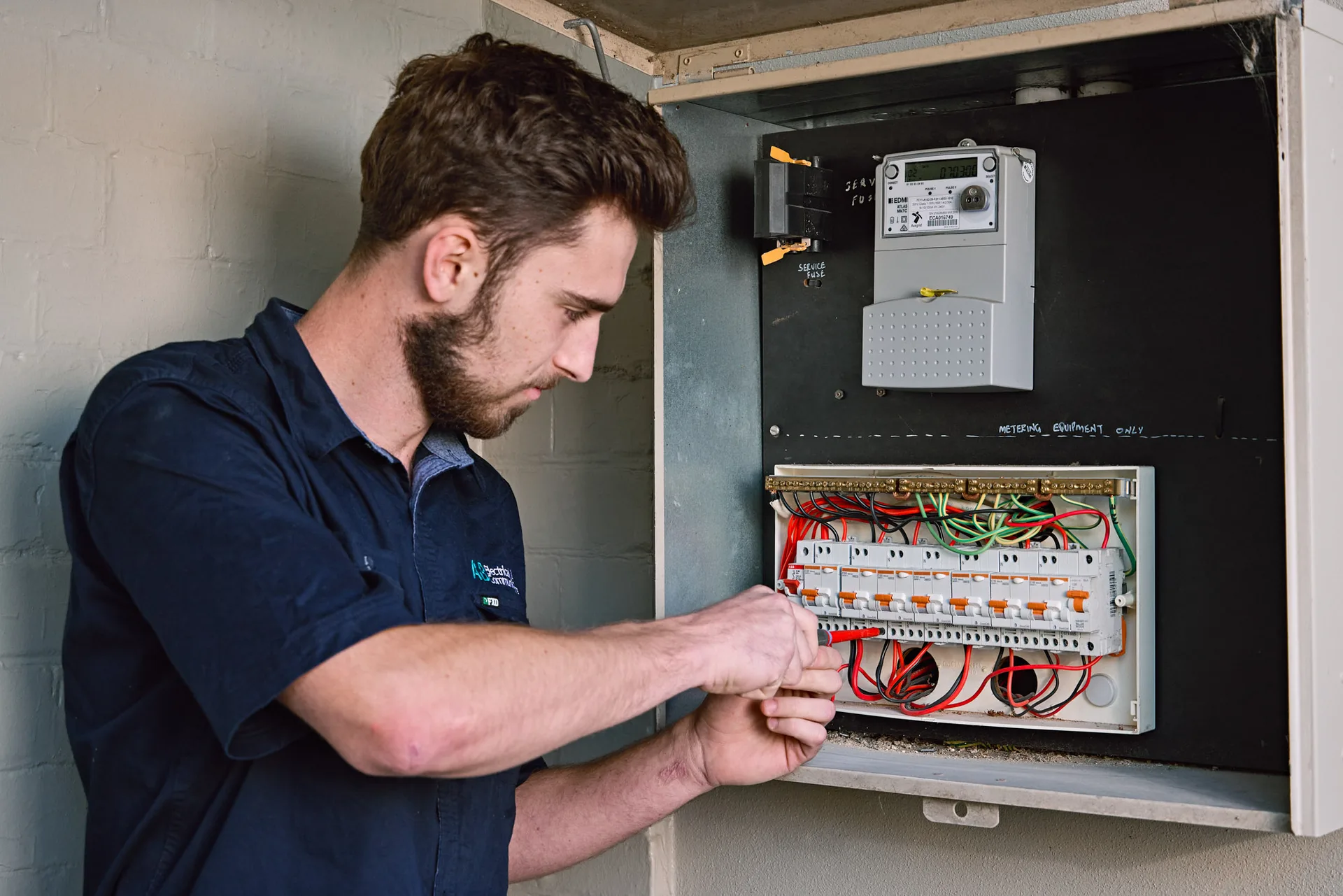
Six Causes, From Common to Rare
A wide range of things can trip a breaker, from the everyday to the genuinely rare.
- A specific appliance drawing too much current. Especially common with heaters, older fridges and anything with a failing motor.
- Too many devices on one circuit at once. The combined load simply exceeds what the circuit's rated for.
- A short forming in the cable run. Perished insulation gives current a route it was never meant to travel.
- The breaker mechanism itself wearing out. Mechanical parts inside age and weaken with years of switching.
- Water reaching an outdoor or bathroom point. Dampness near a live connection is asking for trouble.
- A genuine earth fault caught by a safety switch. That's the switch protecting you from shock exactly as designed.
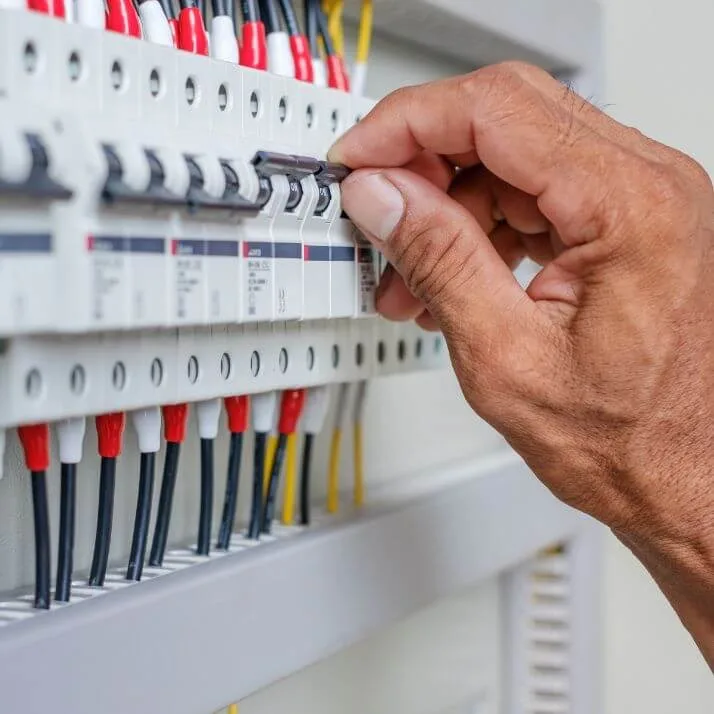
Is a Tripped Circuit Breaker Dangerous?
One trip that resets cleanly and holds isn't dangerous. That's the safety mechanism doing exactly its job.
It becomes worth real concern if the breaker won't stay reset, if it trips the moment you plug in something specific, or if you notice heat, a smell or discolouration at the board.
Together, those signs mean something's genuinely wrong right now, not a passing overload, so pick up the phone rather than flicking the switch back on again.
Never hold a breaker in place with anything other than its own switch. If it wants to trip, let it.
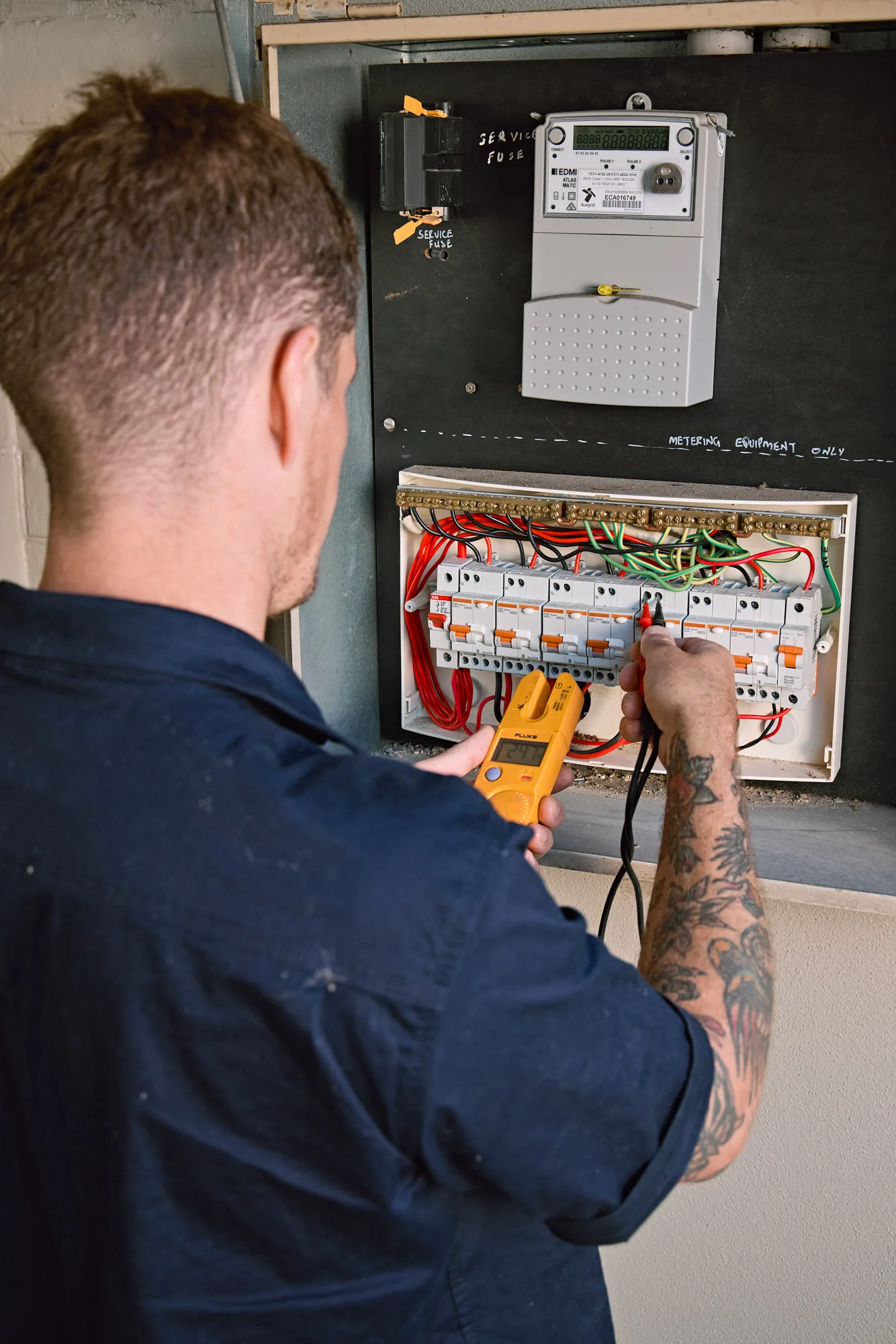
Do This First
Clear everything off the affected circuit. This tells you whether an appliance is behind it.
Reset the breaker with nothing plugged in. If it holds, add devices back one at a time to find the culprit.
Stop and call if it trips with nothing connected. That points to a wiring fault, not an appliance one.
How We Fix a Tripped Circuit Breaker
We test the circuit under realistic load to see exactly when and why it trips, rather than relying on your description alone.
That includes checking the breaker's own condition, since a worn mechanism can trip prematurely even on a healthy circuit.
If the problem turns out to be behind the wall rather than at the board, we chase it to its actual source rather than swapping the breaker and hoping.
Whatever the cause turns out to be, appliance, wiring fault or a failing breaker, we lay it out plainly and put a number on paper before doing anything more.
Every repair is carried out to standard, and our workmanship guarantee means a genuine repeat of the same fault is on us to sort.
Why Annandale's Housing Makes This Common
A fair share of the breaker calls we take near Hinsby Park trace back to a straightforward mismatch: century-old cabling meeting a modern breaker's far more sensitive trigger point.
Older wiring was never tested against today's protection standards, and a circuit breaker reacts far faster and more precisely to a marginal fault than the original fuse-era design ever anticipated.
That's often a good thing. It means small faults that would have gone unnoticed on an old fuse board now show up as a trip, well before they become anything more serious.
It does mean a period home's breaker deserves a proper diagnosis rather than a shrug that the breaker's simply too sensitive.
Check What Was Running First
Before blaming the wiring, think back to exactly what switched on in the seconds before the trip.
Anything with a motor or an element that heats up can pull a brief surge well above its normal running current, enough to trip an otherwise healthy circuit.
Notice the same device causing it each time, and you've likely found your answer without needing anything more than a replacement or a different point to plug into.
Trips continuing with everything unplugged tell a different story entirely, and that's squarely a job for us rather than another guess at the appliance.
How to Stop It Happening Again
A circuit that trips repeatedly is asking for attention, not another reset.
- Give heavy appliances their own circuit instead of sharing one already under strain
- Have a breaker that trips intermittently assessed rather than living with it
- Get ageing wiring checked if trips have become more frequent over time
- Replace a worn breaker rather than repeatedly resetting a failing one
- Book an overall board assessment if it's been a long while since one was done
A switchboard upgrade addresses the board itself, while a one-off point or appliance fault is more often a straightforward electrical repairs job.
Related Faults and Surrounding Areas
A board that trips can share a cause with a point running hot, and we've written that connection up on the overloaded power points page, alongside a full loss of power on power outages.
This is one of the more frequent calls we get from Annandale, Camperdown, Rozelle and Stanmore alike.

Book an Electrician Today
A breaker that keeps tripping has a reason behind it, and it's worth finding. Call (02) 9538 7444 and we'll track down exactly what's causing it.
Common questions
Tripped Circuit Breaker FAQs
Quick, honest answers before you reset that switch one more time.
Is a tripped circuit breaker an emergency?
Not on its own. A breaker that trips once and resets fine is worth monitoring, and it becomes urgent only if it won't stay reset or shows other warning signs.
Is it my appliance or my wiring?
Unplugging everything on the circuit and resetting the breaker tells you a lot. If it holds, the appliance was likely the cause. If it trips again empty, the fault's in the wiring.
Can I fix it myself?
No. Diagnosing and repairing the actual cause is licensed electrical work in NSW, even though resetting the switch itself looks simple.
Will the repair come with a certificate?
Yes, you get a Certificate of Compliance for Electrical Work on any notifiable repair to the circuit, once it's tested.
Can I keep using the circuit while I wait?
If it's holding after a reset, yes, though it's worth easing off heavy appliances on it until it's checked properly.
How do you find the fault?
We test the circuit under load, check the breaker itself, and inspect connections and wiring until we isolate exactly what's tripping it.